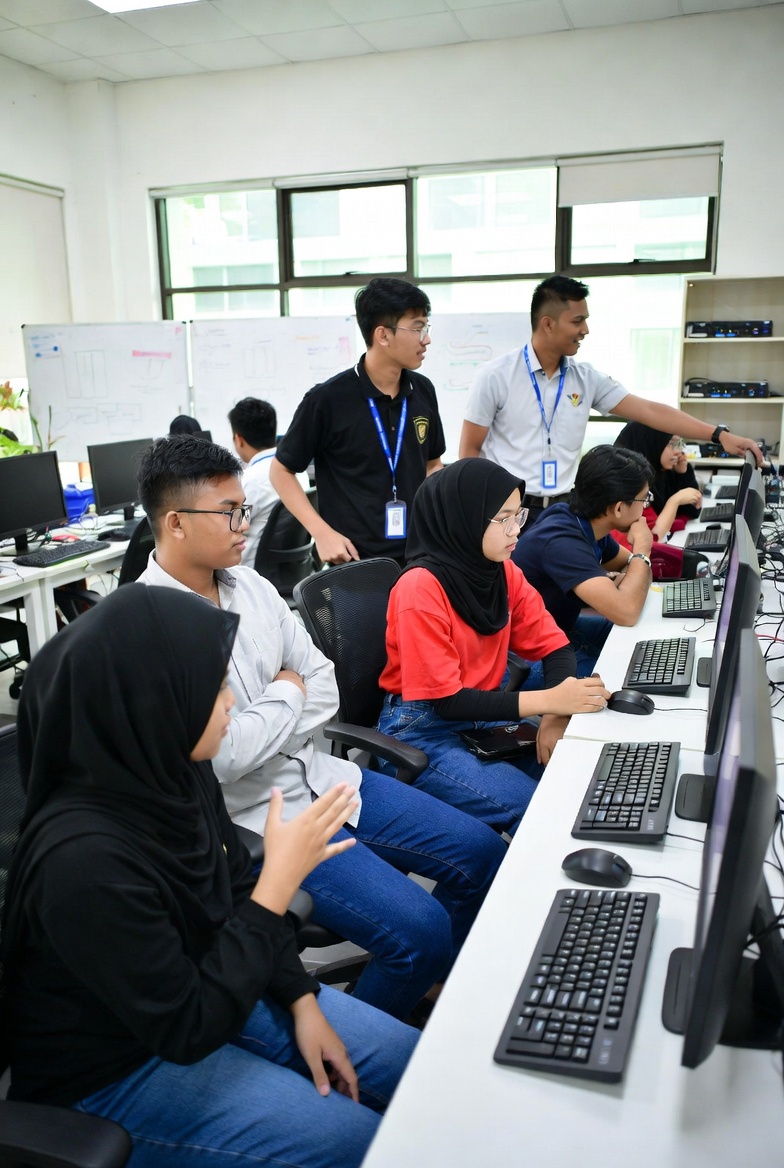

Bachelor of Information Technology & Networking
This programme is designed to produce professionals in Information Technology, cybersecurity, and computer networking. Students are trained to manage, develop, and maintain secure, stable, and high-performance IT systems to meet the demands of the modern digital industry.
Apply Now
Why Choose This Programme?
The Bachelor of Information Technology & Networking programme is designed to equip students with professional skills in information technology, computer networking, and cybersecurity, aligned with the needs of today’s digital industry.
System Development & Management
IT system development, database management, and maintenance of applications and servers.

Networking & Infrastructure
Network configuration, server management, and stable as well as secure IT infrastructure.

Cybersecurity
Data protection, system security, and management of cyber risks and incidents.

Professional Academic Staff
Guided by experienced lecturers and IT experts in networking and cybersecurity.
Core Modules of the Bachelor of Information Technology & Networking
The modules in the Bachelor of Information Technology & Networking are structured to develop professional skills in system development, network management, cybersecurity, and modern technologies. Each module integrates theory, laboratory practice, and projects to prepare students for careers or further studies.
Fundamentals of Programming & Algorithms
Fundamentals of programming, algorithmic logic, and professional software development.

Application & Web Development
Development of web and mobile applications, including UI/UX and databases.
Cybersecurity & Networking
Cybersecurity, network administration, and protection of organisational systems.

Practical Projects & Portfolio
Development of a digital project portfolio and documentation of real systems.

Data Management & AI
Fundamentals of artificial intelligence, data management, and intelligent systems.

Career Preparation & Final Year Project
IT career preparation and implementation of the final year degree project.

Career Prospects & Your Opportunities
Graduates of the Bachelor of Information Technology & Networking have professional career opportunities in the fields of information technology, networking, and cybersecurity. The programme structure supports graduate employability as well as pathways to further studies.
System & Application Developer
Involved in the development of IT systems, web and mobile applications, as well as organisational system integration.
Network & Infrastructure Administrator
Managing networks, servers, and IT infrastructure, including network configuration and security.
Cybersecurity Specialist
Protecting organisational systems and data, managing risks, and conducting cybersecurity audits.

Data Management & IT Analytics Manager
Managing information systems, IT data analysis, and supporting technology-based organisational decision-making.
Entry Requirements & Eligibility
This section explains the academic qualifications and background of candidates who are suitable to pursue the Bachelor of Information Technology & Networking. Entry requirements are set to ensure that students are able to follow the structure of study and programme requirements effectively.
STPM / Matriculation Graduates
Minimum pass in STPM, Matriculation, or equivalent qualifications. Suitable for students who wish to further their studies in information technology and networking.
Working Adults / IT Professionals
Suitable for individuals who are currently employed and wish to enhance their skills in system management, networking, or cybersecurity in line with industry needs.
Supporting Documents
Copies of Identity Card, academic transcripts, and relevant documents such as certificates or IT project records (if any) for eligibility verification purposes.
Schedule & Programme Duration
This section explains the duration of study and schedule structure for the Bachelor of Information Technology & Networking. The programme structure is designed to enable students to balance theoretical learning, practical training, and work commitments in an organised and realistic manner.

Standard Duration
The duration of study ranges between 3 to 4 years, depending on the module structure and the student’s rate of progress throughout the programme.

Class Schedule
The learning schedule is arranged flexibly, covering theoretical sessions, practical training, and structured learning activities according to each module.
Learning Format
Learning consists of a combination of theoretical lectures, practical laboratory sessions, and IT projects to develop students’ technical and professional skills.
Fees & Financial Assistance
This section explains the tuition fee structure and the available financial assistance options for students of the Bachelor of Information Technology & Networking. The information is structured to help students plan their education financing in a realistic and ethical manner.

Installment Facility
Installment payment options are available to assist students in managing tuition fees throughout the programme.

PTPTN Financial Aid
Eligible students may apply for PTPTN financing to cover tuition fees and related costs.
Sponsorship & Special Support
Opportunities for sponsorship or financial support are subject to eligibility criteria and specific strategic collaborations.
Frequently Asked Questions (FAQ)
This section compiles frequently asked questions related to the Bachelor of Information Technology & Networking to help students understand the programme structure, learning approach, and pathways after graduation.
Who is suitable to join this programme?
This programme is suitable for pre-university graduates, IT workers, networking professionals, or individuals who wish to build skills in information technology, cybersecurity, and computer networking.
Is this programme conducted online?
The programme is delivered online through KDM Global EDU Online with a combination of theoretical lectures, practical training, and structured IT projects.
What is the duration of this programme?
The duration of study is typically between 3 to 4 years, depending on the module structure and the student’s progress throughout the programme.
 What are the prospects after graduation?
Graduates may pursue careers such as system administrators, network engineers, cybersecurity specialists, IT analysts, or continue their studies to a higher level.
Interested to Learn More?
Learn more about the Bachelor of Information Technology & Networking and the application process through the KDM Global EDU Online platform.